
Trout Fishing: The 10 Best Tips for More Catches (All Seasons 2026)
Catching trout sounds easy. Until you're standing by the water, spot a beautiful fish, and still nothing happens. The most common reason: the method doesn't match the season.
Trout are not uniform fish. Their behavior, where they hold, and how willing they are to feed change with every season. If you use the same method in summer as you do in spring, you're fishing out of touch with reality. In this article, you'll learn exactly which lures, rigs, and techniques work in each season, how to retrieve for trout properly, and why one thing matters more than any lure: the right timing.
Trout fishing methods by season - everything at a glance:
- • Which lures & rigs work best, and when?
- • Seasonal differences in biting behavior explained
- • Practical rating table overview
- • Setups for spring, summer, autumn & winter
- • Tips on presentation, time of day & choosing waters
Understanding trout: Why does the season decide everything?
Trout are cold-blooded fish. That means their body temperature - and therefore their entire metabolism - depends directly on the water temperature. In cold water, trout need less food, move more slowly, and respond to less aggressive presentations. In warmer water, they are active, aggressive, and ready to react to fast-retrieved lures.
The key number is 8 degrees Celsius. From this water temperature onward, trout begin feeding actively. Between 12 and 16 degrees, they are at their most active. Above 20 degrees, they retreat to cooler, oxygen-rich areas and become harder to catch again.
Another important point: trout do not strike on the bite like pike. They take the lure and turn away. That's why you must not set the hook when trout fishing. Just keep reeling. The trout hooks itself.
The seasons affect biting behavior
Trout adapt to the course of the year like hardly any other fish. Temperature, light, oxygen, and food availability determine their behavior and therefore also when and how they bite at all. Anyone who uses the same setup for trout fishing all year round is often fishing out of touch with reality. So the rule is: every season requires a different strategy. Here you'll find out what to watch out for and when.
Catching trout in spring
For many trout anglers, spring is the best time of year. The water warms up, insects hatch, and trout begin hunting actively. After the passive winter months, they feed intensely and respond to a wide range of lures.
The best spots in spring are shallow, sun-warmed areas. South-facing banks warm up faster than north-facing banks. Inflows with oxygen-rich current are especially productive. Trout hold in the upper water layers and are easy to spot from the surface.
Almost everything works as a lure in spring. That makes this season ideal for beginners. Small spoons in gold or silver, spinners, and hardbaits in natural colors produce consistent bites. The retrieve can be slower than in summer because the water is still cooler. Steady reeling with short pauses is the most effective technique.
When trout fishing in spring, it's especially worth heading out early in the morning. In the first hours after sunrise, trout are extremely active and sit just below the surface.
Catching trout in summer
Summer brings the warmest water temperatures and, with them, the most active trout. However, their behavior changes significantly. During the day, when the sun is strong, they retreat to deeper, cooler areas. Inflows, shady spots, and deep holes are now the productive spots.
You have the best chances early in the morning before sunrise and in the evening after sunset. During these phases, trout move into the shallow-water zones and are more aggressive.
In summer, you can retrieve faster than in spring. Trout respond to lures that imitate escape movements. A spoon pulled quickly through the water column provokes reaction bites even from fish that aren't actually hungry. Hardbaits in bright colors like chartreuse or orange work especially well in murky water.
When using natural bait, the bee maggot is especially effective in summer. Presented on a float rig at a depth of 50 to 80 centimeters, it produces reliable bites even on difficult days.
Catching trout in autumn
For experienced anglers, autumn is the most exciting trout season. The fish build up energy reserves for winter and feed heavily. You can now work with larger and more eye-catching lures than in summer.
The water temperature drops again and trout leave their summer retreat areas. They move through all water layers again and are on the move. Actively changing spots pays off now. Instead of waiting at one holding spot, you actively go looking.
For autumn, we deliberately recommend using larger or more eye-catching lures. Spinners in gold and copper, hardbaits in vivid autumn colors, and faster retrieves bring bites. The trout is ready to strike.
You'll be perfectly equipped with our hardbait, the Thor Mini. This hardbait imitates an injured baitfish and provokes strikes even from larger trout that would otherwise ignore smaller lures.
Typical for autumn:
-
Trout are actively feeding and less shy
-
Aggressive lure presentation is more likely to be rewarded
-
Thor Mini hardbait for maximum catch success
-
Spinners, soft lures & spoons in bright colors can provoke strikes
Catching trout in winter
Winter is the most demanding season. The water is cold, the trout's metabolism is slow, and its willingness to feed is low. Even so, trout fishing in winter is possible if you have the right strategy.
In winter, trout sit deep and stay calm. Deep holes, quiet bays, and spots with little current are their winter holding areas. Shallow water and areas with strong current are avoided.
The retrieve must become extremely slow. Minimal movement, long pauses, and small lures are the recipe. A bottom rig with a bee maggot just off the bottom is one of the most reliable methods in winter. Heavy spoons that stay on the bottom and are moved only minimally also get bites.
Cast less, be more patient. In winter, the rule is: better to fish one good spot thoroughly than to change spots every five minutes.
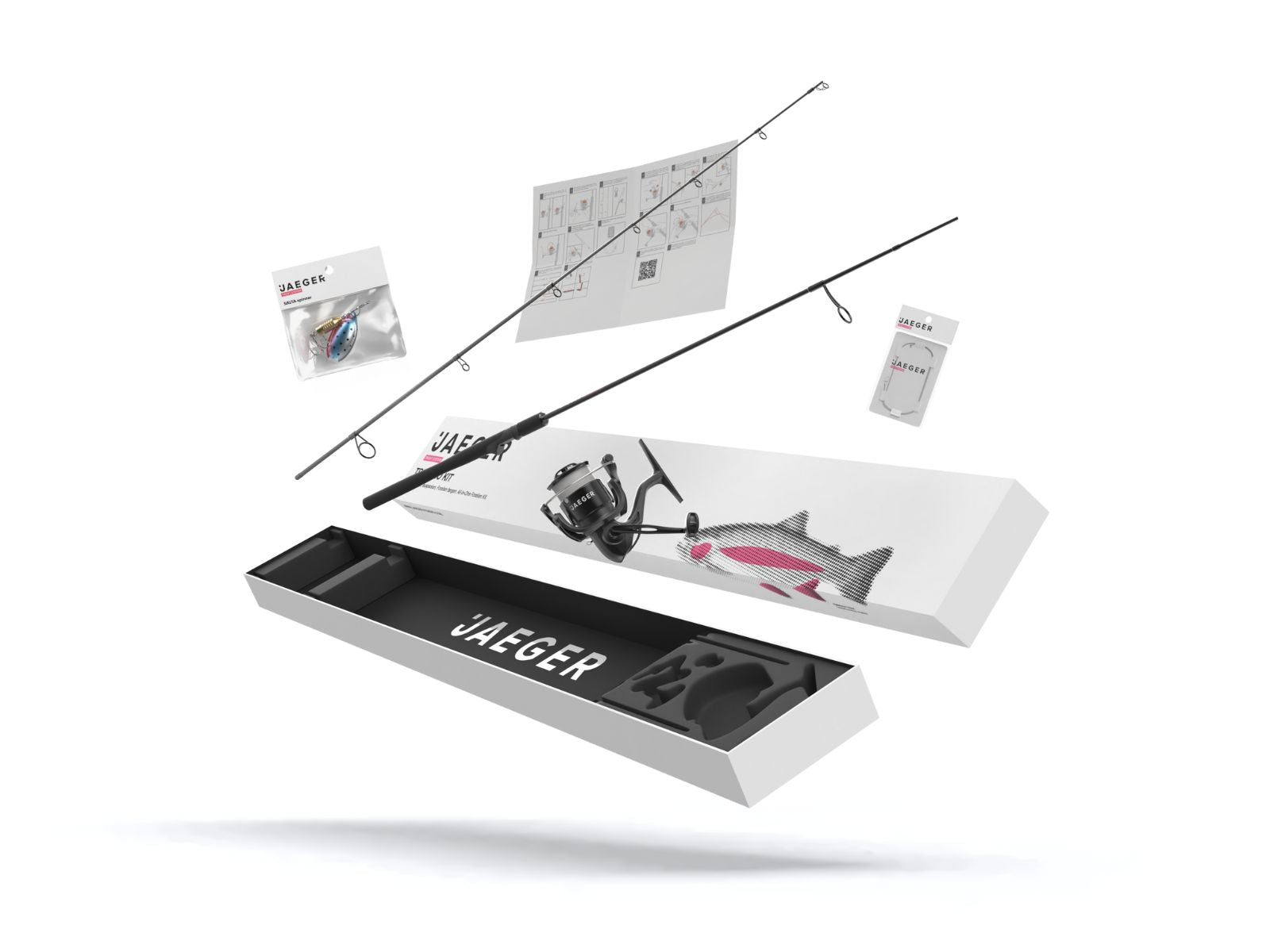
TROUT GO KIT 2 - TROUT STARTER COMBO
(98) ★★★★★
Successful trout fishing: Perfectly matched lures, colors & rigs for commercial trout waters and natural lakes. Ideal for beginners and anyone who wants to catch more at the trout lake.
➔ Discover the Trout Go KitSeasonal table: Which lure when?
TROUT
| Rig / Lure | Winter | Spring | Summer | Autumn |
|---|---|---|---|---|
| Spoon | ★★ | ★★★★ | ★★★★★ | ★★★ |
| Spinner | ★★ | ★★★★ | ★★★★★ | ★★★ |
| Trout dough | ★★★ | ★★★★★ | ★★★★ | ★★★ |
| Bee maggots | ★★★ | ★★★★★ | ★★★★ | ★★★ |
| Soft lures | ★★ | ★★★ | ★★★★ | ★★★ |
The best trout fishing methods at a glance
Spinning: The most active and versatile method
Spinning is the most effective method for actively searching for and catching trout. With a spoon, spinner, or hardbait, you cast out and reel in. The trout attacks as soon as it sees the lure.
The advantage over other methods: you can cover a lot of water in a short time and actively search for the fish. Especially in spring and autumn, when trout are active in all water layers, spinning is unbeatable. You can find the full trout range - spoons, spinners & hardbaits - in our trout collection.
Proper retrieve when spinning: Steady reeling is the foundation. Vary the speed until you find out what works today. Short pauses followed by fast reeling often provoke reaction bites. Faster in summer, very slow in winter.
And once again: never strike. Just keep reeling when you feel a bite.
Float rig: For calm spots and natural bait
The float rig is ideal if you want to present natural bait like bee maggots or if the trout are holding in a calm spot. You set the depth and let the bait remain at the right depth or reel it in slowly.
Setting the depth is crucial. Try different depths until you find the trout. Often they are only 20 to 50 centimeters below the surface, sometimes close to the bottom.
Bottom rig: For winter and difficult conditions
In winter and when trout are very passive, the bottom rig is the most reliable method. The bait lies close to the bottom and moves only minimally. A bee maggot, trout dough, or a small artificial lure on a light bottom weight gets bites even when other methods fail.
Sbiro rig: The all-rounder for light baits
The sbirolino as a casting weight and float body makes it possible to cast very light baits like bee maggots far and present them at different depths. This rig is especially suitable for lakes, canals, and calm areas. The sbirolino floats on the surface and shows you every bite.
The best trout lures compared
Not every lure works the same all the time, and with trout fishing methods, the right trigger at the right time often makes the difference. Here you'll get an overview of which fishing lures work and which don't, when they excel, what kind of retrieve is needed, and what you can specifically use from the JAEGER range.
Spoon - a visual trigger for active trout
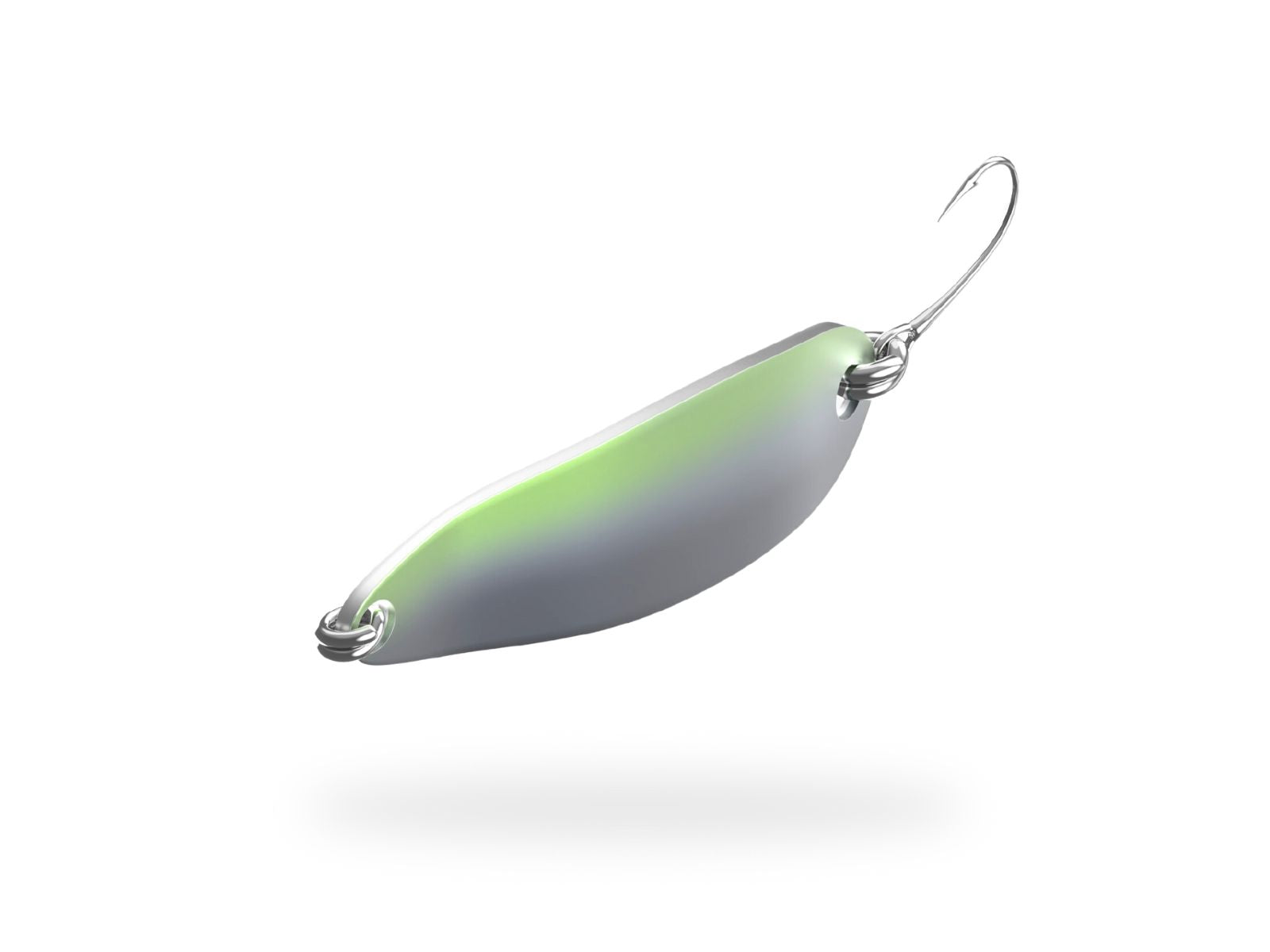
Spoons are light spoons that run shallow and attract visually through their action. Especially in clear conditions and with active trout, you can fish them very effectively - ideal in spring and summer.
Spoons can be retrieved ultralight, with short spin stops, twitches, or simply by reeling them in. It's important to test different colors: in sunshine, often silver or light shades work best; in overcast weather, copper or UV colors are better.
✔ High catch rate when fish are visible
✔ Ideal for streams, trout ponds, and clear lakes
✔ Requires an ultralight rod & thin line
Our tip: The NEMA Spoon from JAEGER - optimized for trout in both color and action. Super light, super effective.
Spinner - rotation makes the difference
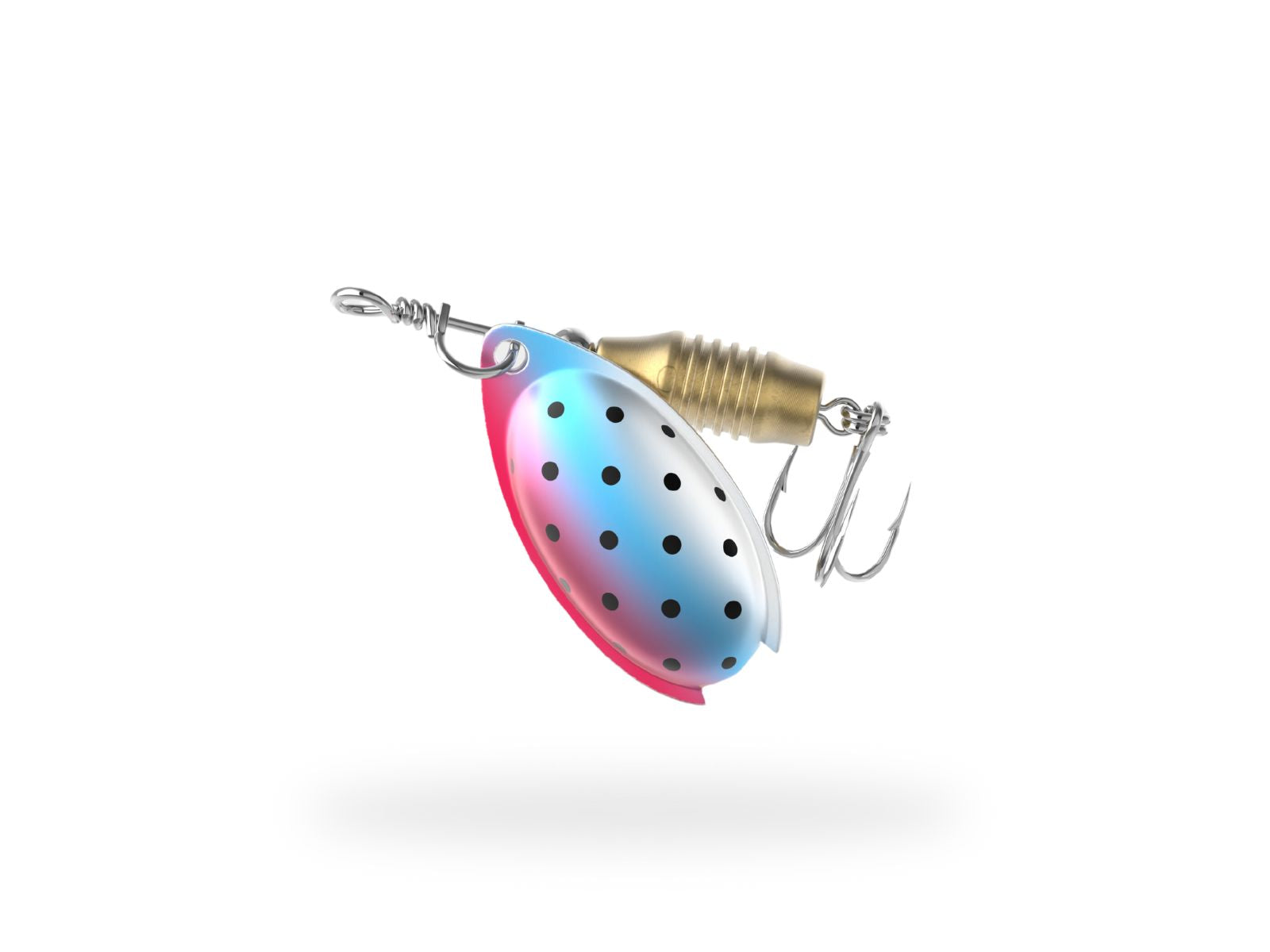
Spinners create pressure and light reflections - this works especially well in moving water or with aggressive fish. In summer and autumn, spinners are hard to beat when trout respond to stimulation.
Retrieve the lure at a fairly brisk pace so the blade runs cleanly. In deeper zones, you can also let it sink and then fan it along the bottom.
✔ Strong in current or wind
✔ Attracts through rotation and pressure
✔ More suited to active phases
A perfect match: The SALTA Trout Spinner. Compact design, with a smooth action even at low retrieve speed.
Dough & natural baits - classics with scent appeal
Trout dough, bee maggots, small worms - these are the timeless classics among trout fishing methods, especially in the cooler season. They work through scent, shape, and taste and are particularly well suited to bottom or float rigs.
Dough can be twisted, kneaded, made to float - experiment with shape and color. In spring, scent is often decisive: garlic, salmon, or cheese can make all the difference.
✔ Versatile to use
✔ Especially strong on murky days or in cold water
✔ Also works with reluctant fish
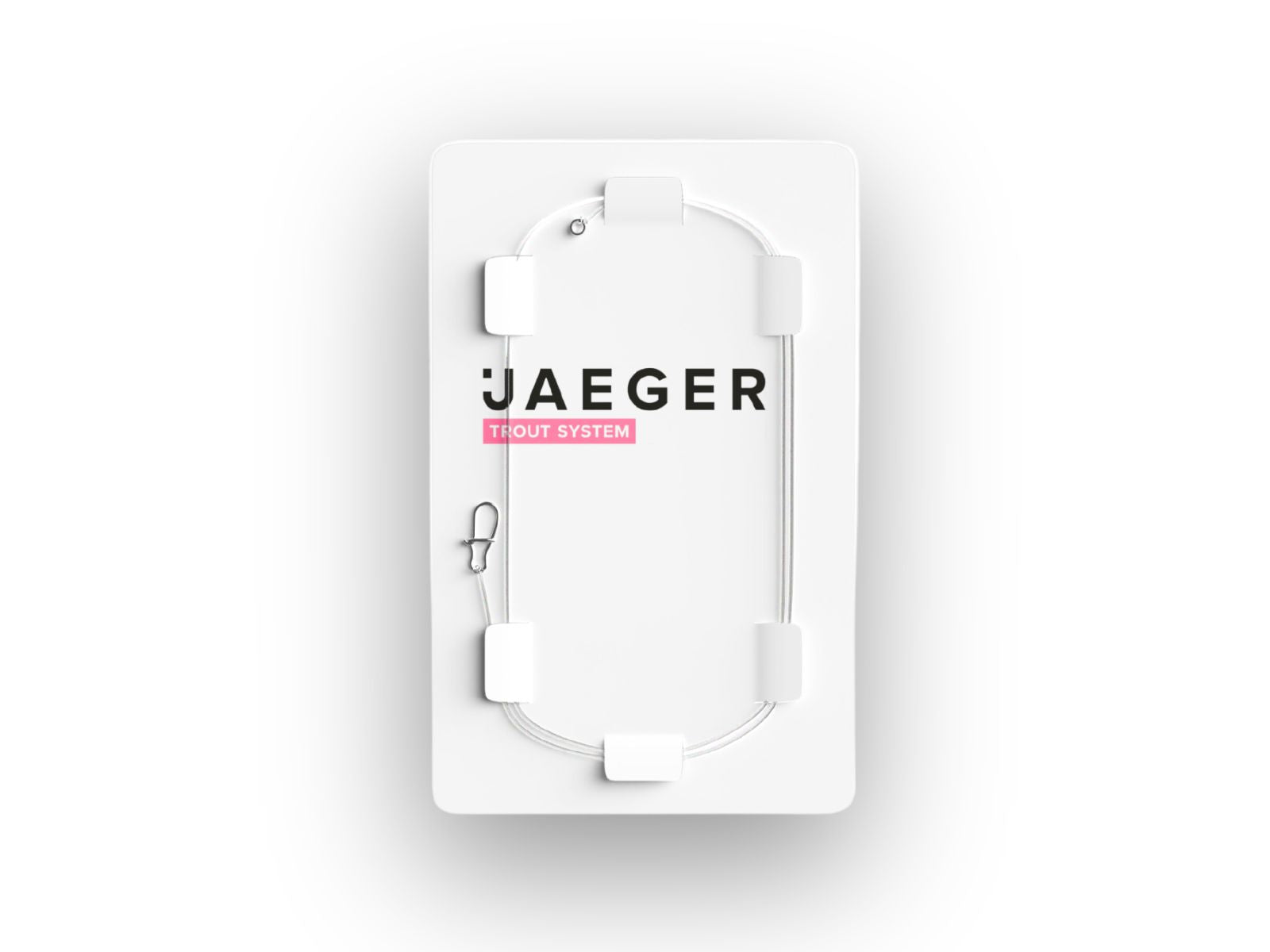
Setup tip: Combine dough with the SNAP RIG trout leader, for a clean presentation without line twist.
Soft lures - modern, flexible, underrated
Soft lures show their strengths when flexibility matters. You can jig them, drag them, twitch them along the bottom, or retrieve them slowly - depending on the trout's mood that day.
They are a real insider tip especially in waters with bottom structure or deeper zones - for example in summer or early autumn.
✔ Adaptable to any water depth
✔ Various retrieve techniques possible
✔ Ideal with jig head or dropshot
The right setup for trout anglers
If you want to fish for trout using different methods - spoon, spinner, or natural bait - above all you need a fine-tuned, well-balanced setup.
That's exactly what the Trout Go Kit by JAEGER was developed for.
TROUT GO KIT 2 - TROUT STARTER COMBO
(98) ★★★★★
Successful trout fishing: Perfectly matched lures, colors & rigs for commercial trout waters and natural lakes. Ideal for beginners and anyone who wants to catch more at the trout lake.
➔ Discover the Trout Go KitRigs for trout - what really works
It's not just the lure that matters - the right fishing rig also decides whether you get the bite. These four methods have proven themselves:
Bottom rig
Perfect in winter. The bait rests quietly on the bottom, where sluggish trout linger. Especially good with dough or bee maggots.
Tip: With the SNAP RIG for trout, your leader stays clean and twist-free.
Float rig
Ideal for wary trout in spring. The depth can be set precisely, and every movement is visible.
Read more in the article: Fishing methods for beginners
Jig rig
Actively retrieved soft lures are strong in autumn. Jig along the bottom, with short pauses - trout often snap during the drop.
Spoon rig
Top choice in summer when visibility is clear. The spoon is retrieved ultralight - fast, precise, tempting.
For flexible use: SNAP RIG with spoon, color-adjustable at any time.
What is the right gear for trout fishing?
Good trout tackle doesn't have to be expensive, but it has to match. A light fishing rod between 1.80 and 2.40 meters
Choose line with a diameter of 0.16 to 0.20 millimeters, either monofilament or thin braid. A fluorocarbon leader in 0.16 to 0.18 millimeters makes your lure less visible in clear water.
Everything you need to get started is bundled in the Trout Go Kit 2. Rod, reel, and matched lures in one combo. You can find the full trout range here.
The most common mistakes in trout fishing
Striking on the bite
This is mistake number one. Many anglers instinctively strike when they feel a trout and pull the lure away in the process. Just keep reeling. The trout hooks itself.
Wrong season, wrong method
Fishing with a fast-retrieved spoon in winter is pointless. The method has to match the water temperature. Use the seasonal table above as a guide.
Too much noise by the water
Trout are skittish. Loud footsteps, shadows falling across the water, and restless behavior on the bank scare off fish that were just about to bite. Move quietly, keep low, proceed slowly.
Always the same lure
If a lure hasn't produced a bite after 20 minutes, change it. Changing the color, size, or type can make all the difference. Trout in heavily fished waters know the standard lures.
Wrong depth on the float rig
Always try different depths. Trout are not always where you expect them to be. Systematically testing from top to bottom brings more success than choosing a depth at random.
Further reading
You can find more tips for trout season here:
Trout fishing in spring: Best methods and spots
JAEGER trout collection - all lures, rigs & sets
Fishing for trout: The 10 best tips for more catches
Target species kits: The complete trout setup
FAQ
Which lure catches trout best?
There is no universal all-time catcher. The most versatile are spoons like the NEMA, which work in every season and in every type of water. In autumn, a hardbait like the Thor Mini delivers especially good results. In winter and with passive fish, a bee maggot on a bottom rig is often more effective than any artificial lure.
When is the best time for trout fishing?
Spring and autumn are the most productive seasons. In spring after the closed season, trout are hungry and aggressive. In autumn, they feed heavily for winter. The best time of day is early in the morning shortly after sunrise.
Why mustn't I strike when trout fishing?
Trout take the lure and turn away. As you reel in, they hook themselves. Anyone who strikes pulls the lure out of the trout's mouth before it has hooked itself. Simply keep reeling - that's the right response to any bite.
How deep should I fish for trout?
That depends on the season. In spring, trout hold 20 to 80 centimeters deep near the surface. In summer, deeper during the day at 1 to 3 meters. In winter, close to the bottom. Systematically trying different depths is the fastest way to find the fish.
What's the difference between a trout pond and natural water?
At a trout pond, the fish are stocked more densely and are easier to find. The methods are the same, but because of the heavy fishing pressure, the fish often respond to different lures than they do in natural water. In a stream or lake, you first have to find the fish, which requires more experience - but is also more fascinating.
Do I need a fishing license for trout fishing?
Yes, in Germany a valid fishing license is mandatory. In addition, you need a permit for the specific water. Trout lakes and fishing ponds often have their own day tickets available directly on site.
More tips for catching trout
-
Time & weather: Early mornings and late evenings in mild weather significantly improve your chances.
-
Choosing a location: Trout often hold along drop-offs, inflows, shaded areas, or close to the surface (spring).
-
Strength and choice: Choose the right line and the hook that goes with it
-
Leader length & presentation: 60-120 cm depending on depth, current, and lure. Natural presentation is crucial.
About the author
Sasha Sperl
Author and content writer at JAEGER Fishing. Sasha has been interested in fishing tackle for years with one goal only: setups that work right away - without requiring years of experience. Every JAEGER product is tested directly on the water with experienced anglers before it goes into the shop.